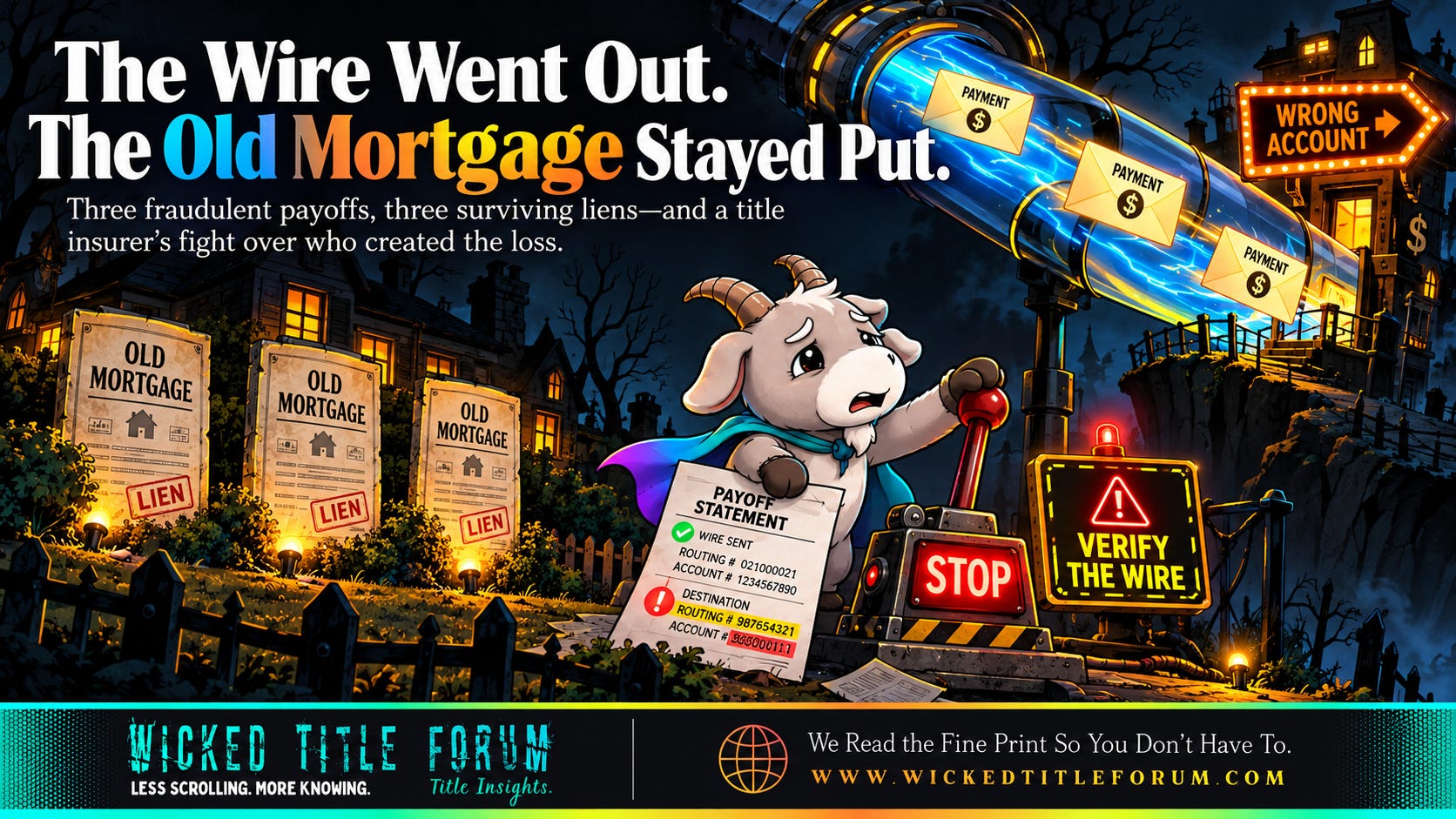
🐐🏛️From the Docket: The Wire Went Out. The Old Mortgage Stayed Put.
Three fraudulent payoffs, three surviving liens—and a title insurer’s fight over who created the loss

🐐 Membership | 🔍 Find Answers | 🛒 Shop | 📢 Partner With Us
The case is real. The lesson is real. The story is a fictionalized telling built from the reported facts; names, scene details and dialogue are illustrative.
By the time the second payoff came back unpaid, Elena knew the problem wasn’t the bank.
It was the quiet, awful certainty that the wire confirmation on her screen proved only one thing: the money had left.
Three refinancing files sat in the pending-policy queue. Three borrowers had signed. Three lenders believed their new mortgages would take the agreed priority. Elena had authorized the payoff wires herself, or watched her senior closer do it. The receipts were there, dated, time-stamped, neatly filed. None of the prior mortgages had been released.

Closinglock retrieves payoff statements, verifies them, and protects verified payoffs with up to $5 million in insurance. Protecting you from fraudsters and underwriters who are looking to shirk responsibility.
The office looked offensively normal. Someone in reception was explaining a recording fee. The printer was steadily feeding out commitments. A jar of miniature candy bars sat on the closing counter as if an ordinary Tuesday were still available to them.
“Maybe the servicer’s posting is delayed,” said Jonah, the processor who had brought her the first payoff complaint.
“One, maybe,” Elena said. “Not three.”
She scrolled back through the payoff requests. The statements looked familiar, the loan numbers matched, and the emails appeared to belong in the existing conversations. Then she placed the original instructions beside the version used to release one of the wires.
The account number was different.
The wire had been sent. The mortgage was still unpaid. And Elena was only beginning to discover how far the damage reached.
Who bears the loss when fraudulent payoff instructions reach a closing agent—and can a title insurer deny coverage because the lender hired that agent?
Subscribe to follow the unraveling files, the real Alabama coverage ruling, and the wire-verification controls worth putting in place before the next payoff goes out.

Stay Wicked,
Cheryl
Founder, Wicked Title Forum
Because knowing what’s happening isn’t the same as knowing what to do about it.
Contact Me (or hit reply)
🐐 Membership | 🔍 Find Answers | 🛒 Shop | 📢 Partner With Us

The Wicked Title Forum is a collaborative resource. If you spot something outdated or inaccurate, leave a comment—we’ll get it fixed.
**DISCLAIMER**
Content is for informational purposes, operational awareness and workflow strategy. While every effort is made to ensure accuracy, it is not meant to be a compliance directive or replace the specific legal/financial advice of your retained experts. As always evaluate new information & tools with your underwriter/attorney, accountant/financial advisor, IT/security team, and internal policies, as needed, before implementation.
This site is partially supported by sponsor ads and sponsored content.
Discussion about this post