




🧠 Solve a Problem | 🔔 Upgrade Now | 🛒 Shop | 📢 Be a Sponsor
Title companies have modernized almost everything.
Orders arrive electronically. Documents move through digital workflows. Signatures happen remotely. Closers can manage transactions across counties, states, and time zones.
Then funding approval hits and someone starts printing checks.
Welcome to the last mile.
It is the part of the closing process where modern technology frequently gives way to paper, postage, bank portals, manual entry, overnight packages, reissues, and the occasional ritual of begging someone to cash the large check currently living in their glove compartment.
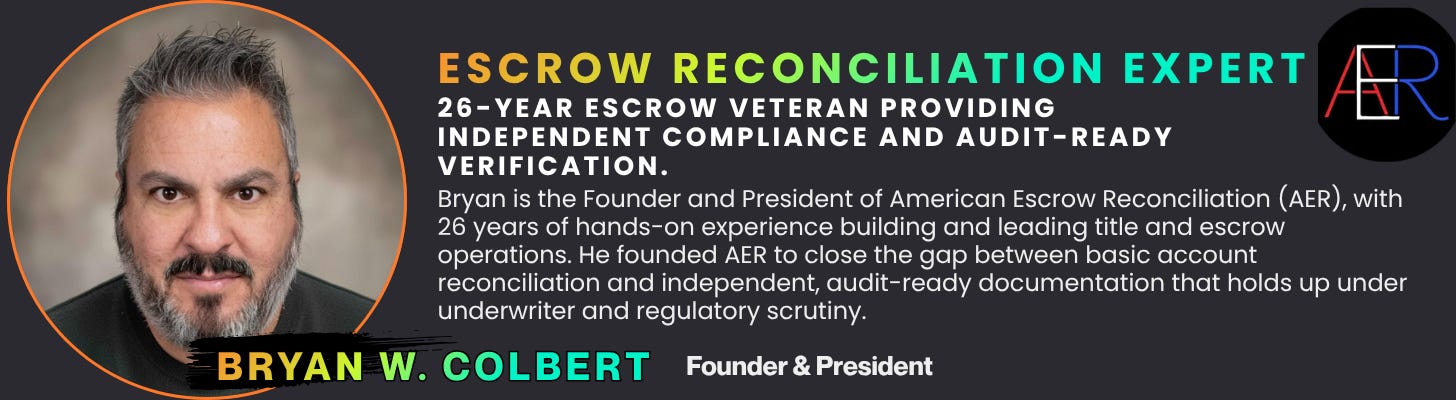
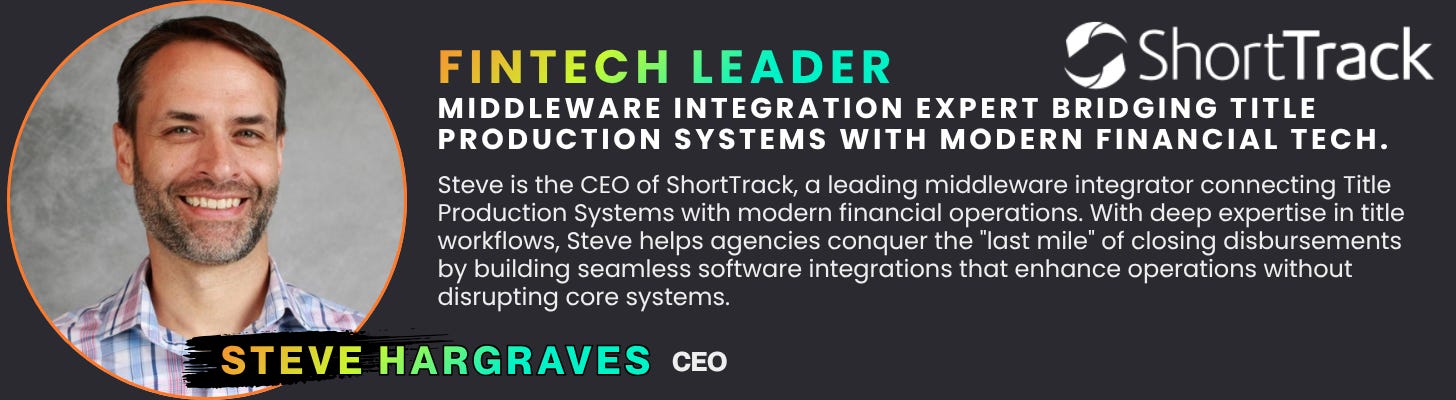
During a recent Wicked Title Forum panel, Scott Dizon of Deluxe Payment Exchange joined Alex Grundhoffer of Near North Title Group, Kristine Mediate of FIT Agency, Bryan Colbert of American Escrow Reconciliation, and Steve Hargraves of ShortTrack to talk about why money movement still creates so much friction—and why fixing it no longer requires ripping apart the systems title companies already trust.
The Hidden Bottleneck No One Owns
Most title teams treat disbursement as the finish line.
Funding is approved. Money goes out. File closed.
Except the file is not necessarily done.
“The finish line isn’t only just moving the money,” Colbert said. “It’s proving that the money landed.”
Until every payment has cleared, every outstanding item has been addressed, and the escrow account can be documented and defended, the agency is still carrying unfinished business.
That unfinished business may include:
checks waiting to clear
reissues and stop payments
recording reimbursements
stale outstanding items
bank cutoff delays
wire verification
reconciliation exceptions
escheatment exposure
The buyer may have the keys. The real estate agent may already be posting the closing photo. Meanwhile, the escrow team is still cleaning up the money trail.
That is the last mile problem.
The Quiet Cost of “We’ve Always Done It This Way”
Paper checks look inexpensive because the cost arrives in tiny pieces.
A little check stock. A little ink. An envelope. A stamp. Maybe an overnight fee because apparently we now routinely pay more than $20 to move a piece of paper across the country.
The bigger expense is labor.
Kristine Mediate looked around her agency and saw experienced employees printing, signing, stuffing, and mailing checks.
“I don’t need them doing this,” she said. “I’d rather them be serving clients on the phone, solving problems, and getting deals closed.”
That is the real cost.
Your best people are not expensive because they know how to operate a printer. They are expensive because they know how to catch problems before those problems become claims, delayed closings, furious clients, or lost referral partners.
Steve Hargraves called the friction between disconnected systems the “swivel chair tax.”
Every time an employee leaves the title production system, opens another portal, rekeys data, compares screens, and carries information back again, the agency pays in time, attention, and preventable mistakes.
“You’re paying your most valuable employees to be data entry clerks,” Hargraves said, “when you should be empowering them to be title experts.”
That is not a minor inefficiency.
It is a capacity ceiling.
The Risk Is Not Limited to Wires
Wire fraud gets most of the headlines, and for good reason. Sending escrow funds to the wrong account can be catastrophic.
But paper is not the safe little analog refuge we sometimes pretend it is.
Checks can be stolen, altered, washed, delayed, misplaced, duplicated, or left uncashed until they become a reconciliation and escheatment problem.
Several panelists had stories about chasing people who would not deposit checks worth tens of thousands of dollars.
Mediate pursued someone who failed to cash a $100,000 check—even after it was reissued.
Grundhoffer recalled a $50,000 check sitting in a safe for roughly two years.
I once spent months begging a builder to cash approximately $60,000 that was sitting in his vehicle.
As Mediate put it:
“We’re probably one of the only industries that actually chase people to cash their check.”
It is funny because it is absurd.
It is not funny when the item is still sitting on the escrow reconciliation months later.
Modern payment processing is not only about speed. It is about reducing the number of places where a payment can be intercepted, altered, forgotten, mishandled, or left unresolved.
The Real Reason Title Teams Resist Payment Innovation
Title companies are not afraid of technology.
They are afraid of broken technology.
They have survived enough failed rollouts, clumsy integrations, duplicated workflows, and expensive “solutions” that created three new problems for every one they solved.
Hargraves captured it perfectly:
“Title fears disruption. We don’t want things broken. We want them better.”
That is especially true when escrow funds are involved.
Nobody wants to discover halfway through implementation that the new process disrupted accounting, created Positive Pay exceptions, forced staff to rekey data, or added yet another platform nobody wants to monitor.
The resistance is not ignorance.
It is scar tissue.
And that changes what a good solution must look like.
What Modernizing Actually Looks Like Without Ripping Everything Out
The good news is that payment modernization no longer requires a full operational demolition project.
Deluxe Payment Exchange integrates directly with SoftPro Select, ResWare, RamQuest, and AccuTitle. Title teams can issue eChecks or use Print+Mail from within the title production systems they already use.
Existing accounts-payable and Positive Pay processes stay in place. Payments continue to reconcile as checks.
This is not transformation.
It is augmentation.
An eCheck is still a check. It simply arrives electronically instead of traveling by truck, plane, sorting facility, mail carrier, and prayer.
Recipients can deposit it through familiar banking methods. When paper is still preferred, Deluxe can print the check on high-security stock, place it in an envelope, add postage, and mail it for the agency.
As Dizon described it, title teams can finally get out of the office “arts and crafts process.”
That means fewer:
printers
envelopes
courier runs
overnight packages
rekeyed payment details
physical checks sitting inside the office
opportunities for human error
And because the solution works inside the title production system, it does not create another manual bridge between platforms.
That part is critical.
A digital payment process that requires staff to copy information into a separate portal is not modernization. It is manual work wearing a nicer outfit.
The Best Change Is Small Enough to Survive
Title companies do not need to convert every payment type overnight.
In fact, they probably should not.
Mediate started with real estate commissions and gradually expanded into payments to attorneys, surveyors, vendors, and other recipients. She also used eChecks as a practical bridge when payments had to be corrected during off-site closings.
Grundhoffer described adoption as an ongoing process. Some employees became immediate champions. Others kept using the familiar ten-minute workaround because they did not believe they had fifteen minutes to learn the permanent fix.
There it is: the operational trap.
Teams repeatedly spend ten minutes on a workaround because stopping long enough to eliminate it feels impossible.
The answer is not a massive technology initiative.
Start with the payments causing the most friction. Show the team what stays the same. Keep a paper option available. Prove the time savings on a real file. Expand from there.
The goal is not to shock the organization into the future.
It is to make the better process easier than the old one.
From Bottleneck to Competitive Advantage
The obvious benefit is speed.
Payees can receive eChecks within minutes of funding approval instead of waiting for the mail or an overnight package.
But the real payoff is bigger.
Near North Title Group reported a reduction of more than 65% in Positive Pay exceptions after integrating Deluxe Payment Exchange eChecks with SoftPro Select.
FIT Agency estimated approximately 25% in labor savings—roughly equivalent to the cost of a junior administrative employee.
Mediate was clear about what she wanted to do with that recovered time:
“I want my staff on the phone with the clients. Because that’s bringing me more business.”
That is the point where payment technology stops being a back-office utility and becomes a growth tool.
Faster payments improve the experience for agents and vendors.
Cleaner records reduce reconciliation headaches.
Fewer outstanding checks reduce audit and escheatment exposure.
Less manual handling narrows fraud opportunities.
Less grunt work gives experienced staff more time to solve actual title problems.
And a team that spends less time printing, mailing, rekeying, tracking, and recutting checks can handle more volume without automatically adding headcount.
Tech is not just operational anymore.
It is how title companies protect margin, create capacity, and compete.
Fix the Last Mile Without Rebuilding the Road
The title industry has earned its skepticism.
Escrow is not the place for flashy technology, half-built integrations, or vendors who disappear the moment implementation gets uncomfortable.
But caution should not become a permanent commitment to paper, postage, and preventable work.
The better question is not:
Do we need to replace our systems?
It is:
What can we add to the systems we already trust that removes friction without weakening control?
Deluxe gives title agencies a practical way to issue eChecks and Print+Mail payments directly through supported title production systems.
No grand demolition.
No accounting overhaul.
No forcing every payee into one method.
Just a better way to move money through the last mile—and finally bring the closing process closer to being truly done.
Explore Deluxe Payment Exchange
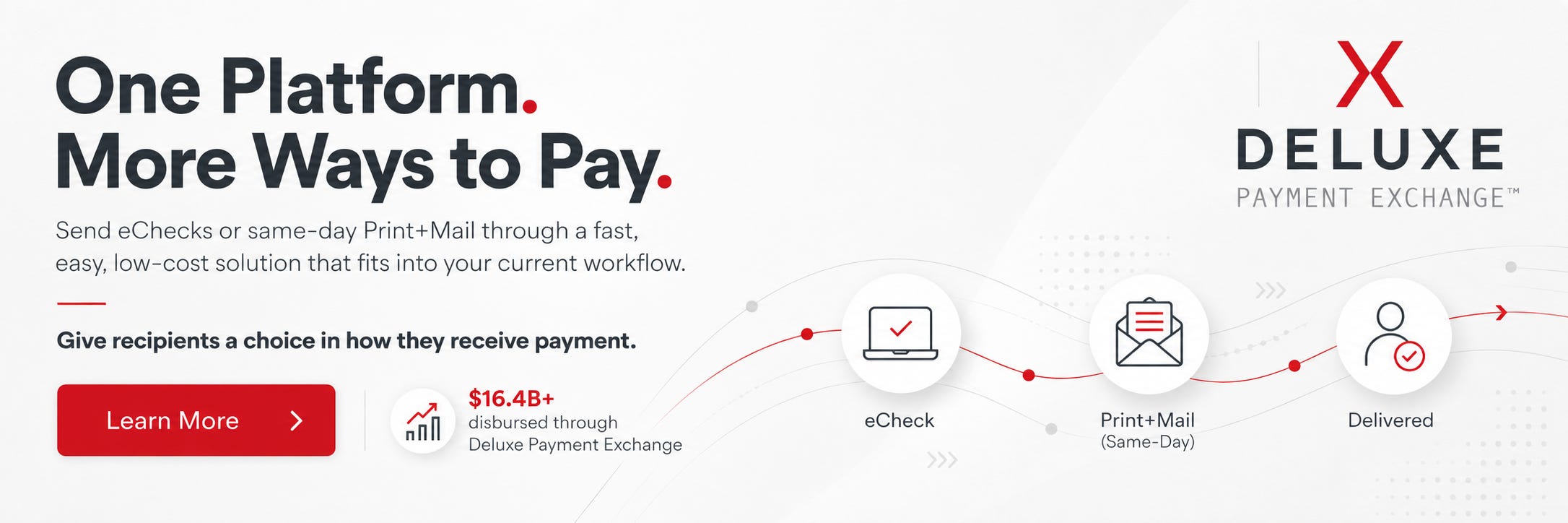
See how Deluxe Payment Exchange service integrates with SoftPro Select, ResWare, RamQuest, and AccuTitle to help title agencies reduce manual work, deliver payments faster, and modernize escrow disbursements without replacing their core workflows.
Visit the Deluxe TPS Integrations page for integration details, case studies, FAQs, and ROI tools.
Scott Dizon
Director of Business Development, Digital Payments for Title & Real Estate
Deluxe
scott.dizon@deluxe.com
470-550-6488
Meet the Panelists



Stay Wicked,
Cheryl
Contact Me (or hit reply)
🐐 About Wicked Title | 🔔 Subscribe | 🛒 Shop | 📢 Be a Sponsor

**DISCLAIMER**
Title agencies should evaluate payment processes, escrow controls, security procedures, and regulatory obligations with their financial institution, underwriter, compliance advisors, and other appropriate professionals before implementation.
Content is for informational purposes, operational awareness and workflow strategy. While every effort is made to ensure accuracy, it is not meant to be a compliance directive or replace the specific legal/financial advice of your retained experts. As always evaluate new information & tools with your underwriter/attorney, accountant/financial advisor, IT/security team, and internal policies, as needed, before implementation.
This site is partially supported by sponsor ads and sponsored content.


