


🐐 Membership | 🔍 Find Answers | 🛒 Shop | 📢 Partner With Us
The case is real. The lesson is real. The story is a fictionalized telling built from the reported facts; names, scene details and dialogue are illustrative.
The first check arrived in a cream envelope, along with a handwritten note: Thanks for helping us grow.
Alicia Vega almost left it unopened beside her car keys. She’d spent the morning showing houses in freezing rain, and all she wanted was to get home before her daughter went to bed. But the name on the return address stopped her: Keystone Settlement Partners.

Six months earlier, Alicia had paid a few hundred dollars for a small stake in the new company. She’d bought it because she knew the founders, liked their closers, and thought a piece of a growing business might someday help pay for her daughter’s college tuition. Her broker had called the investment a rare chance for working agents to share in the money made after they handed a file off.
Inside was a distribution check large enough to cover three mortgage payments.
She laughed out loud. Then she called her broker.
“You said this would be a long game.”
“It is,” he replied. “Imagine what next quarter looks like if we keep the closings coming.”
The sentence registered as a compliment. Later, Alicia would remember it rather differently.
At Keystone, the new business felt like a rescue. Settlement volumes had been erratic, and owner Ben Calder had spent too many Friday afternoons doing payroll arithmetic with one eye on the bank balance. Now real estate agents had invested, orders were arriving, and his experienced closers were finally busy enough to stop wondering whether the company would make it another year.
The investor arrangement had two classes of ownership. Ben and his operating partners held one class. Agents and brokers held the other. The professionals bought their shares at the offered price, and quarterly profits went out according to the units on the books. Ben liked the simplicity of that explanation. They were owners. Owners were supposed to share profits.
But he also loved the monthly investor dashboard.
Across its columns were each agent’s name, shares, referrals received, files opened, closings funded, and projected business for the next sixty days. Every quarter Ben circulated it with a cheerful message about momentum. The investors compared numbers. A few began competing.
Alicia found herself thinking about Keystone before she even reached the paragraph of a purchase agreement where settlement services were discussed. The closer there was good. She could honestly tell buyers that. It also crossed her mind that each file helped the business she owned a part of.
One Tuesday, a young couple at her kitchen table asked whether they had to use Keystone. The husband had a title company his family had used for years.
“Of course not,” Alicia said, and she meant it. “Use whoever makes you comfortable.”
They chose Keystone anyway. Alicia was pleased. Two weeks later she couldn’t remember whether she’d handed them the affiliated-business disclosure from her onboarding packet. She could remember the rain that day, the toddler trying to eat a marker, and the wife’s anxious questions about the cash to close. The form itself was a blur.
By the third quarter, investors were being invited to nice dinners. There were ballgame tickets, too. Ben called it appreciation. The agents called it networking. Nobody called it compensation for referrals, although the conversation always seemed to find its way back to who was sending what.
Then the September production report arrived.

Alicia’s name was highlighted. Her closings had dropped while she handled a difficult family situation. Ben’s note thanked the group and asked everyone to send additional business. A paragraph below mentioned reviewing partner participation and potentially reallocating shares.
She read it twice, then phoned him.
“Am I losing my investment because my mother has been sick?”
“No one’s said that.”
“Then what’s a participation review?”
Ben explained that the business couldn’t carry partners who never brought business. The shares had been offered with certain expectations. He was trying to be fair to the other investors.
“I paid for my shares,” Alicia said. “Do I own them, or am I renting them with referrals?”
Alicia paid for an ownership stake. So why did sending fewer customers suddenly seem to threaten it?
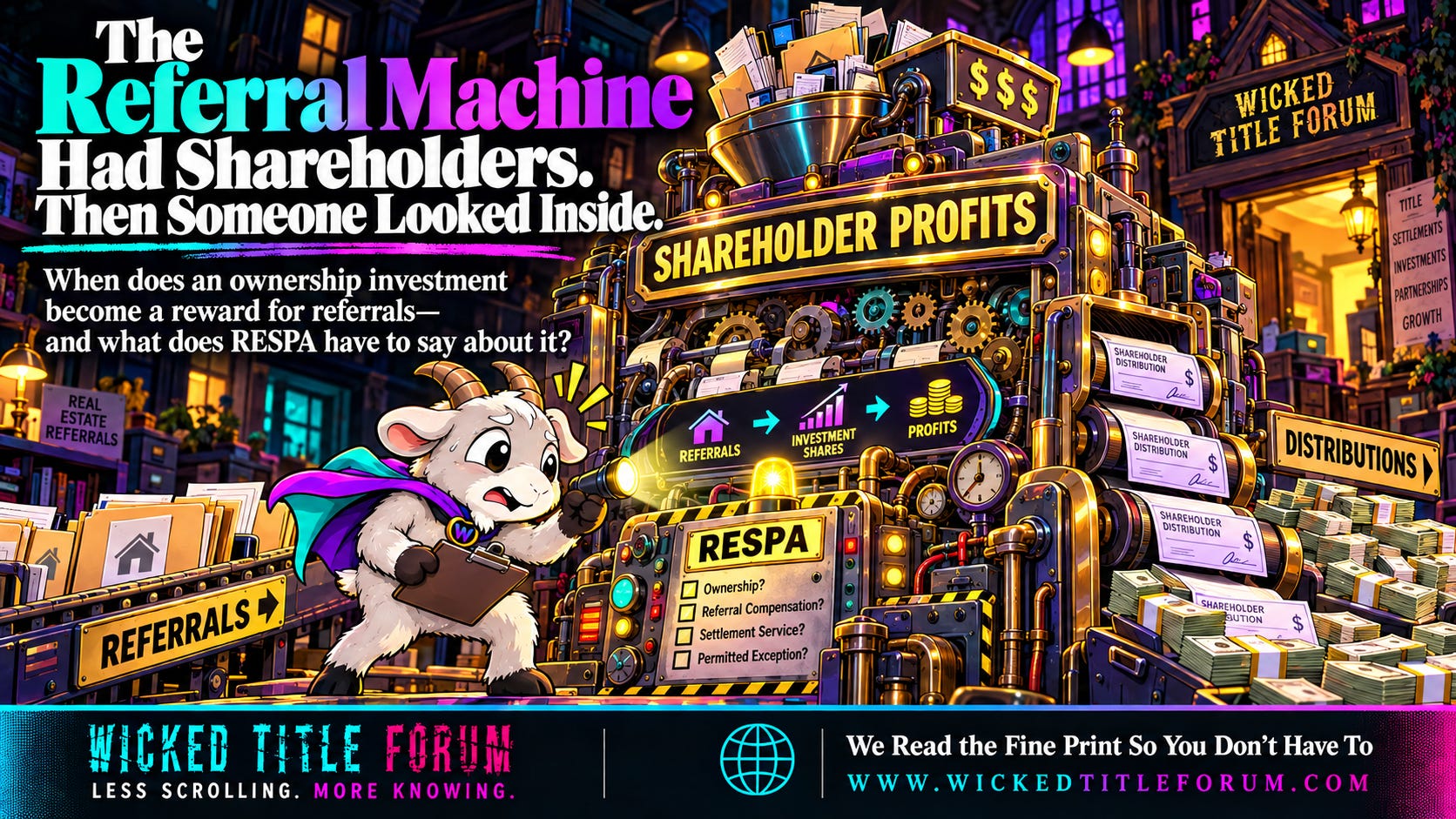
The answer reaches far beyond her investment. A real Pennsylvania lawsuit challenges how referral relationships, shareholder benefits, and consumer disclosures fit together—and a federal judge has allowed that case to continue.
Subscribe to follow what happens at Keystone, what the court actually decided, and the ownership and referral practices that could put a title agency at risk.
Stay Wicked,
Cheryl
Founder, Wicked Title Forum
Because knowing what’s happening isn’t the same as knowing what to do about it.
Contact Me (or hit reply)
🐐 Membership | 🔍 Find Answers | 🛒 Shop | 📢 Partner With Us

The Wicked Title Forum is a collaborative resource. If you spot something outdated or inaccurate, leave a comment—we’ll get it fixed.
**DISCLAIMER**
Content is for informational purposes, operational awareness and workflow strategy. While every effort is made to ensure accuracy, it is not meant to be a compliance directive or replace the specific legal/financial advice of your retained experts. As always evaluate new information & tools with your underwriter/attorney, accountant/financial advisor, IT/security team, and internal policies, as needed, before implementation.
This site is partially supported by sponsor ads and sponsored content.